I. Specific practices of teaching supervision in the school
Since its establishment in November, the Teaching Supervision Group of the School of Food and Pharmacy has centered around the theme of deepening classroom teaching reform and enhancing the connotation of teaching quality. Based on the current teaching situation of young teachers and newly recruited teachers in the school, the following work ideas have been proposed: The focus is on providing guidance to young teachers and newly recruited teachers in teaching norms, teaching implementation effects, and the preparation of teaching materials. The specific approach is to conduct an open class teaching every week, which is arranged by the directors of each major in the school in turn. The open class teaching lasts for two class periods. In addition to the members of the supervision group and the directors of majors, teachers who do not have teaching tasks in the same major group are encouraged to participate in the open class supervision. At the same time, leaders of the school and other professional teachers are welcome to actively participate. After the open teaching, members of the supervision group provide feedback in class, affirming the strengths and especially pointing out the teaching deficiencies to promote the progress of young teachers. The supervision group then forms teaching supervision opinions and publishes them in the form of a brief report.
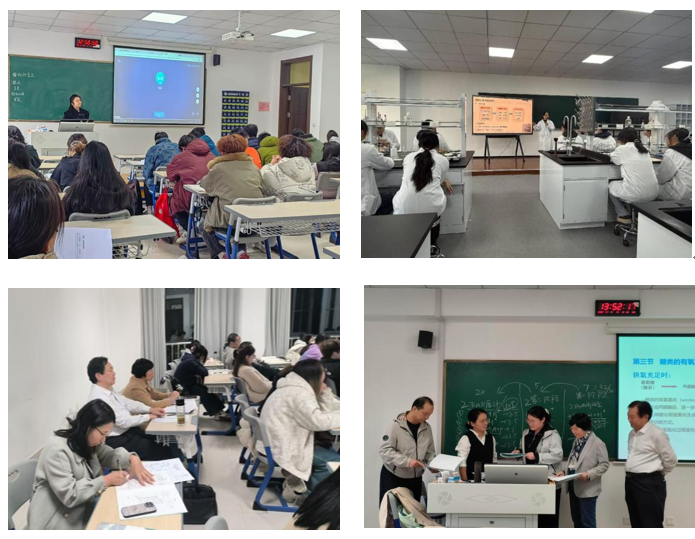
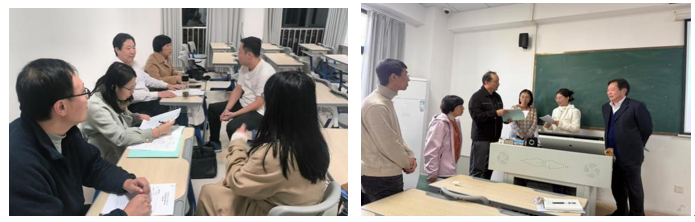
In November, through classroom observation, spot checks of teaching materials, and teacher-student discussions, the college organized open classes for young teachers on four courses from four professional groups, namely Food Biochemistry, Basic Medicine, Food Additives, and Food Standards and Regulations. Teachers from the college's supervision team, directors of various majors, and professional teachers conducted face-to-face communication and exchanges with each teacher regarding their teaching performance.
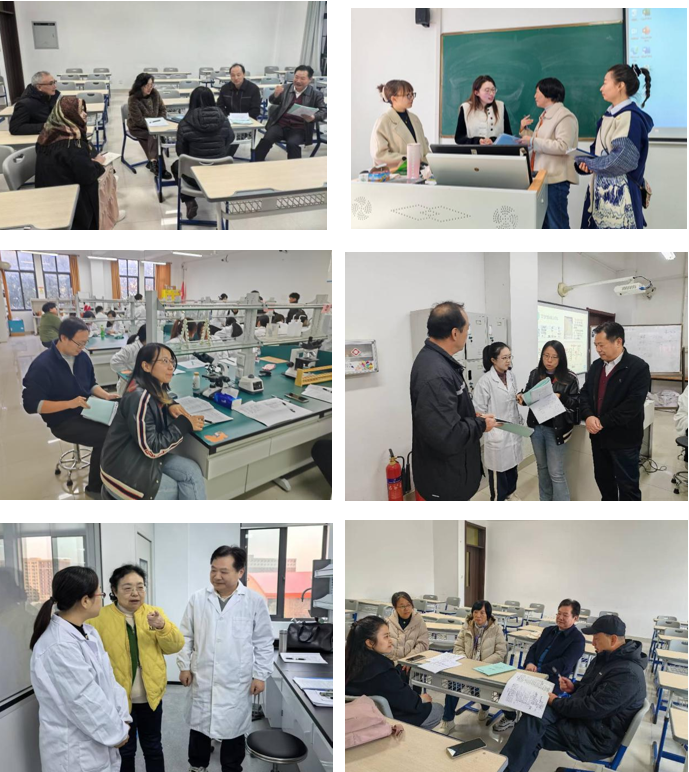
In December, based on the summary of the work in November, the supervision team continued to group according to professional directions, implemented the mechanism of attending open classes, and selectively chose two theoretical courses and two experimental courses for open class teaching activities. The professional theoretical courses were Food Chemistry and Food Safety taught in the form of flipped classroom, while the experimental courses were Pharmaceutical Preparation Technology experiment and Inorganic Chemistry experiment. At the same time, the supervision team invited school-level supervisors Dai Xiaobo and Chen Weiguang to participate in the supervision of open classes for theoretical and experimental courses respectively, and made wonderful comments on the spot.
This semester, 28 evaluation forms for supervisory observation of classroom teaching were completed. The results of the evaluation forms for the observed teachers were mostly above good, providing effective support for the college's teaching quality monitoring.
II. Highlights and Features of the College's Teaching Supervision Work
Innovatively constructing a three-dimensional supervision system encompassing pre-class, in-class, and post-class: Before class, the focus is on reviewing the syllabus, lesson plan design, and preparation of teaching resources; during class, an 80-minute immersive observation is conducted, and supervisors quantify and score through classroom observation in the observation evaluation form; after class, real-time feedback is provided through one-on-one communication with teachers, acknowledging strengths and highlighting teaching shortcomings to promote the progress of young teachers and ensure that issues identified during the supervision process are closed-loop resolved. Through open class activities, young teachers prepare carefully and attach great importance to them, achieving remarkable results. The main highlights and characteristics are manifested in the following aspects:
Firstly, in the exploration of classroom teaching models and teaching effectiveness, Food Safety Science has been experimented with as a flipped classroom teaching model. The supervision team recognized the positive spirit of experimentation and innovative approaches in curriculum teaching. They exchanged views with the lecturer on the teaching format and management of the flipped classroom, jointly discussing how to fully mobilize students' initiative and enthusiasm for learning, how to enhance students' cognitive ability to grasp the accuracy and focus of course content, and how to stimulate the enthusiasm and full participation of group members. It is hoped that the lecturer will boldly innovate and explore the flipped classroom, dialectically view and effectively handle new problems arising from new classroom teaching models, and, based on the achievements of the flipped classroom exploration, promote it in some classroom teaching in the college, jointly exploring and collaborating to tap into new dynamics and paradigms of classroom teaching.
Secondly, in the teaching of theoretical courses, the open class teachers effectively and skillfully demonstrated the application of the smart classroom module. From the accumulation of a large number of knowledge points before class, the sorting and timely consolidation of corresponding course content, the stimulation of students' learning enthusiasm, and the accumulation of students' enthusiasm from previous classes, they truly integrated modern teaching concepts and digital teaching theories into the classroom and practiced them in course teaching. This reflects the unique innovative consciousness and exploratory spirit of new teachers. During face-to-face communication with the supervision team, they affirmed the important role of the smart classroom in classroom teaching, which can effectively regulate the classroom teaching atmosphere and strengthen the teaching of classroom knowledge points in a targeted manner. They also pointed out the consistency of smart classroom teaching scenarios and the normativity and universality of knowledge points. They required young teachers to continuously explore and enhance the depth and breadth of the participation of the smart classroom in classroom teaching.
Thirdly, in experimental teaching, some open class teachers demonstrate profound theoretical knowledge and a conscientious teaching spirit, blending the liveliness of regular teaching with the rigor of public course teaching. Their teaching style is upright and contagious, with thorough and meticulous preparations such as debugging theoretical lecture slides before class, preparing practical training equipment before class, dividing practical training groups, and allocating reagents to each group. The theoretical foundation is closely linked with practical training operations, with full attention paid to students' listening status and practical training performance throughout the process. The supervision team believes that open class teachers have demonstrated a certain level of professionalism.
III. Excellent classroom teaching cases of college teachers
(1) Theoretical course of Food Safety Science: Innovative practice of flipped classroom
Teacher: Lin Weiwei (a teacher under 35 years old, a lecturer)
Highlights: Food Safety is an attempt to adopt a flipped classroom teaching model. Through the teaching mode of pre-class preview, group classroom explanation, peer evaluation, initiating group chat, and teacher's focused explanation and questioning on key points, it can fully mobilize students' initiative and enthusiasm for learning, deepen their understanding and memory. The lecturer's demeanor is natural and lively, with strong appeal; the language is clear and fluent, with high interaction frequency; the teaching process is reasonably arranged, and the methods are flexibly and appropriately applied. The supervision record shows that flipped classroom requires high standards for students, and as an attempt, teachers need to summarize and timely supplement any deficiencies. Teacher Lin did a good job and the application of smart classroom is worth promoting.
(II) Experimental Course of Inorganic Chemistry: Situational Teaching Cases
Teaching instructor: Wang Chunling (newly recruited teacher in September 2025, associate professor)
Highlights: Employing enlightening teaching methods, it drives students' thinking with problem-oriented guidance, excels at mobilizing students' learning initiative, and effectively highlights key points and breaks through difficulties. It pays close attention to students' listening status and practical operation throughout the process, emphasizes the transmission of a scientific and rigorous scholarly attitude in teaching, and clearly requires students to describe objective facts and report truthfully in their experimental reports. It guides students to respect experimental results and adhere to academic integrity, reflecting the cultivation of students' scientific literacy. The classroom always adheres to the student-centered educational philosophy, maintaining students' strong interest in experiments, high classroom participation, and their ability to actively think and participate in interactive discussions, which embodies the distinctive characteristics of vocational education.
IV. The following improvement suggestions are proposed for the issues existing in the classroom teaching of college teachers
1. Strengthen teaching method training: Encourage teachers to participate in seminars or training courses on teaching guidance organized by the academic affairs office, and invite municipal-level teaching masters to share their experiences, so that teachers can keep up with the pace of the times in the AI intelligent environment.
2. Implement the mentorship mechanism: Each professional group should implement a one-on-one mentoring system for their new or young teachers, truly leveraging the role of passing on knowledge, helping and guiding.
3. Experimental teaching needs further standardization: Firstly, classroom management of experimental courses should be strengthened. The laboratory should be clean and orderly, with sufficient preparation before class and standardized student attire. Secondly, experimental teaching facilities and equipment should be fully equipped before class to ensure adequate teaching resources. Thirdly, experimental safety education should be emphasized. Specific experimental content should be analyzed for potential safety hazards, and students should be reminded to conduct experiments carefully and safely to ensure the safety and orderliness of experimental courses.
4. Further strengthen ideological and political education in the curriculum: Integrating ideological and political content into curriculum teaching can enrich the teaching content. Through theoretical and experimental teaching in food science, we can explain the craftsman spirit of excellence and stimulate students' sense of industry identity and social responsibility. By instilling cultural confidence and innovation awareness, we can better achieve the organic integration of knowledge impartation, ability cultivation, and value shaping.
5. The teaching supervision team of the college strives to arrange an open teaching session for all young teachers and newly-hired teachers under the age of 35, aiming to highlight strengths, address weaknesses, rectify teaching attitudes, inspire teaching spirit, and enhance teaching abilities.
Attachment: A glimpse of the teaching supervision process
Contributed by:Xianbao Li
Review:Jianlan Chen
Release:Haiyan Gu