
Chinese communist
Organizing principles and discipline
The history of learning Ming theory of learning history to increase the credibility of learning Shi Chongde learning history practice
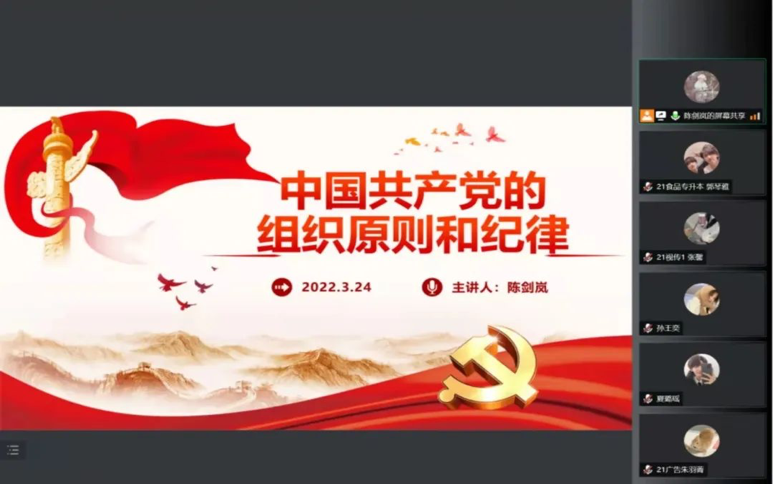
On March 24, 2022, the second lecture of the 11th Training Course for Active Applicants (Intermediate Class) of the third sub-Party School: Party Organizational Principles and Party Discipline was delivered by Ms. Chen Jianlan, deputy secretary of the Party Branch directly under the University of Food and Drug.
01
Party organization and discipline
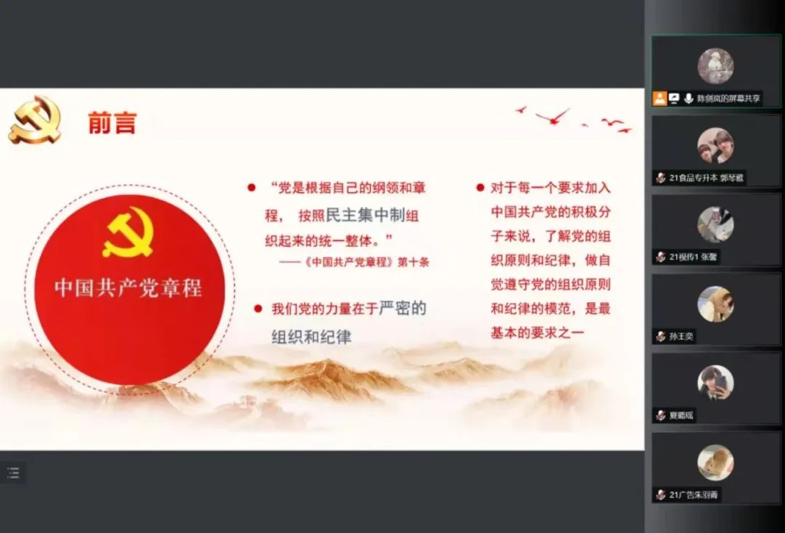
· Formation and development of democratic centralism
Every political organization in the world has its organizing principle and system. As the organizing principle of the Communist Party of China, democratic centralism has developed into a systematic theoretical form through the exploration of Marx, Engels and Lenin, and has been enriched and developed by successive leaders of the Communist Party of China according to the needs of The Times. The Constitution of the Communist Party of China points out that democratic centralism is the combination of centralism on the basis of democracy and democracy under the guidance of centralism. It is both the fundamental organizational principle of the Party and the application of the mass line in the Party's life.
· Basic principles of democratic centralism
1. Individual Party members are subordinate to Party organizations; the minority is subordinate to the majority; lower-level organizations are subordinate to higher-level organizations; and all Party organizations and members are subordinate to the National Congress and the Central Committee of the Party.
2. Leading organs of the Party at all levels are elected, with the exception of representative organs dispatched by them and leading Party groups in non-Party organizations.
3. The highest leading organ of the Party is the National Congress of the Party and the Central Committee it creates. The leading organs of the Party at various levels are the local Party congresses and the committees they produce. Party committees at all levels are responsible and report on their work to the congresses at the corresponding levels.
4. Higher Party organizations should regularly listen to the opinions of lower Party organizations and the masses of Party members and promptly solve the problems raised by them. Lower Party organizations should not only request instructions and report on their work from higher Party organizations, but also independently and responsibly solve problems within the scope of their responsibilities. The upper and lower level organizations should share information, support and supervise each other. Party organizations at all levels should make Party affairs public in accordance with regulations so that Party members can have a better understanding of and participate in intra-Party affairs.
5. Party committees at all levels shall adopt a system combining collective leadership and individual division of responsibilities. Decisions on major issues should be made by Party committees after collective discussion in accordance with the principles of collective leadership, democratic centralism, individual deliberation and decision at meetings. Members of the Committee should earnestly perform their duties in accordance with collective decisions and division of Labour.
6. The Party forbids any form of personality cult. We must ensure that the activities of Party leaders are under the supervision of the Party and the people, while safeguarding the prestige of all leaders who represent the interests of the Party and the people.

02
Party discipline

· The meaning of Party discipline
The Party's discipline can be summarized as political discipline, economic discipline, organizational discipline, honesty discipline, mass discipline, work discipline and life discipline. Party organizations at all levels and all Party members must strictly observe the code of conduct.
· Enhance Party discipline awareness
Party organizations and Party members must adhere to the five never permits in political discipline, the four obedience in organizational discipline and the five relationships in mass discipline. The Party has a complete punishment mechanism for organizations or individuals who violate Party discipline. Only by strengthening Party discipline education, enhancing the concept of Party discipline, consciously observing and resolutely supporting Party discipline, can each Party member and every active member who wants to join the Party be able to stifle violations of the law and discipline in the cradle and create a clean inner-party environment.
03
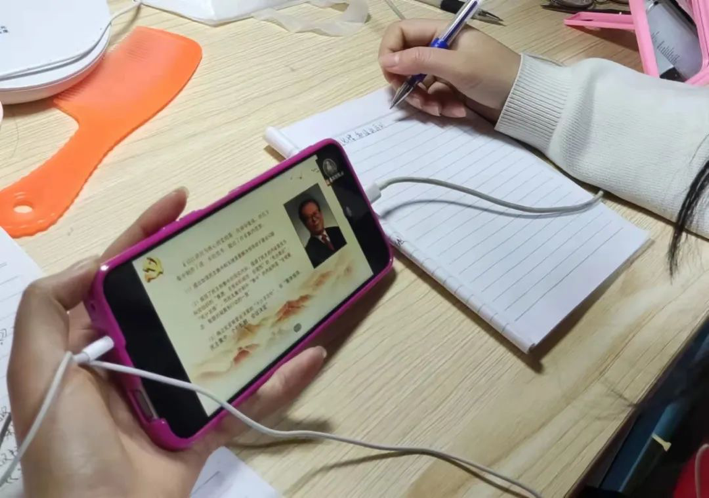
Our experience
21 Quality 2 Liu Shuxian
As a young college student, an active member of the Party, through this party class, I deeply realized that the sense of discipline, political awareness, overall awareness and so on are crucial. I am full of confidence in our Communist Party of China, at the same time I will be strict with myself, both in and out of school according to the rules, for the early realization of the great rejuvenation of the Chinese nation made a modest contribution.
21 Biopharmaceutical 2 Shi Wen
After listening to this section of Mr. Chen's Party class, I also realized that to become an active member of the Party, we must enhance our sense of discipline and legal concept. We must correctly understand the importance of Party discipline and set an example of observing Party discipline and state laws with practical actions.
21 Food Undergraduate 2 stone Swallows
If we want to become a truly excellent party member, we must strengthen the sense of discipline and legal ideas, recognize the relationship between freedom and discipline and the kite and line, learn from the model of Party members, with practical actions to abide by the Party discipline and state laws.